My Cart

How to Wire Your LS Swap for Maximum Reliability

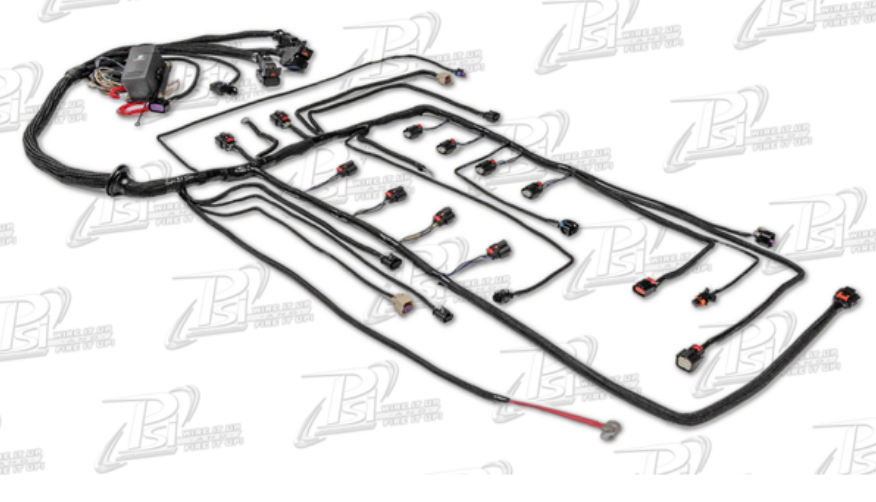
When it comes to LS swaps, wiring is the backbone that determines whether your build performs flawlessly or struggles with electrical issues.
Many enthusiasts focus on engine selection, mounts, or tuning, but the wiring harness is what ties every electronic component together. Proper wiring ensures stable communication between sensors, the ECU, and the engine. Without it, even the most powerful LS engine won’t deliver consistent results.
At PSI Conversion, all wiring harnesses are built and tested in the United States to meet or exceed GM factory specifications. Each harness uses brand-new Delphi connectors, TXL high-temperature wire, and is computer-tested to guarantee reliability under extreme conditions
Understanding the Role of Wiring in an LS Swap
A wiring harness is more than a bundle of wires, it’s an electrical control system designed to integrate the engine with the rest of the vehicle. The harness connects sensors, actuators, and modules that manage functions such as ignition timing, fuel injection, throttle response, and transmission control.
LS engines, from Gen II through Gen V, each require a specific harness layout. PSI Conversion provides standalone harnesses tailored to each LS and LT engine generation, ensuring all components communicate correctly.
Choosing the correct harness eliminates compatibility errors and prevents electrical faults that could affect long-term reliability.
Choosing the Correct LS Harness
Selecting the correct harness starts with identifying the engine generation and configuration. LS engines use different crank and cam sensor setups, injector types, and throttle systems depending on the model year. Installing the wrong harness can cause sensor mismatches, no-start conditions, or erratic performance.
PSI Conversion simplifies this process by offering harnesses specifically matched to GM engine generations, from Gen II LT1/LT4 to Gen V LT/ECOTEC3. Each harness is built to the correct pinout and sensor specifications, ensuring a direct fit and clean installation.
For example, Gen III LS engines use 24X reluctor wheels, while Gen IV engines use 58X wheels. PSI Conversion provides harnesses that correspond to each, such as the HAR-G3CA for Gen III and the HAR-G4WA for Gen IV setups.
Using a harness matched to your engine generation is the first step toward ensuring reliable wiring.
Wiring Materials That Improve Reliability
Reliability starts with material quality. Harnesses built from poor-quality materials may work initially but often fail under heat, vibration, or moisture. PSI Conversion harnesses use TXL high-temperature wire, which is cross-linked polyethylene capable of withstanding harsh environments under the hood.
Each connection uses brand-new GM Delphi connectors, not recycled or refurbished ones. These connectors ensure tight, corrosion-resistant fits for long-term electrical stability. PSI Conversion also sonic-welds each splice, a process that uses ultrasonic energy to fuse wires, removing the risk of weak solder joints or open circuits.
Every harness is then tested using Dynalab or Cirrus computer-based equipment to confirm correct continuity and circuit performance before being shipped.
This multi-step quality process ensures reliability over thousands of miles of operation.
The Importance of Grounding and Power Distribution
Many wiring failures stem from poor grounding. If the harness isn’t properly grounded, the ECU may receive unstable voltage signals, causing misfires, sensor malfunctions, or failure to start.
PSI Conversion harnesses include designated grounding points that should be attached to clean, bare metal surfaces free of paint or corrosion. Connecting these grounds correctly is critical, especially for sensors and coil circuits. Improper grounding can create voltage drops that mimic mechanical problems and waste time during troubleshooting.
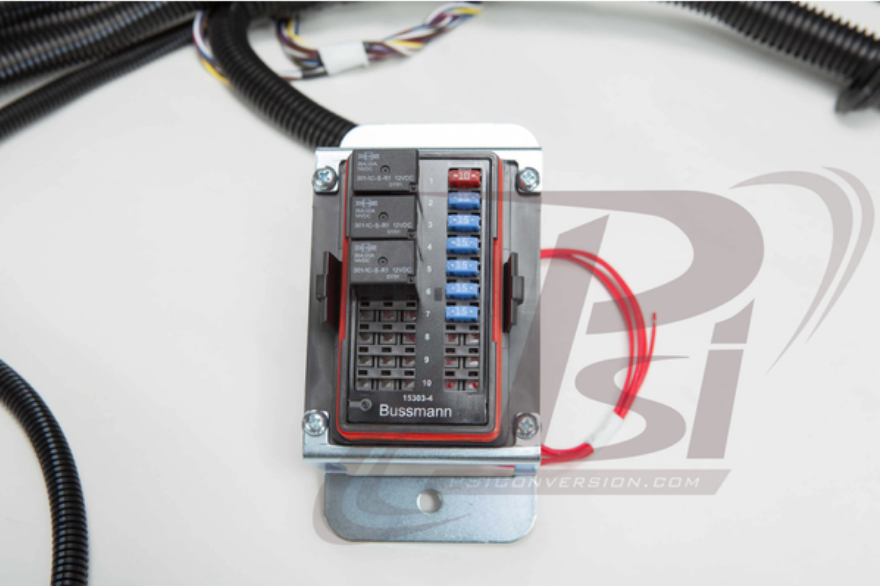
Power distribution is equally important. Each PSI harness includes labeled power feeds that should be routed directly to the battery or a dedicated fuse block. Maintaining solid power and ground connections ensures the harness operates with stable voltage and accurate signal transmission.
Proper Routing and Protection
Wiring reliability depends heavily on how the harness is routed and protected during installation. PSI Conversion standalone harnesses are designed to pass through the firewall, with the ECU and fuse block mounted inside the cabin, usually tucked cleanly under the dash. During installation, a 2-inch hole is drilled in the firewall so the interior branch of the harness can be fed through, and PSI supplies a rubber grommet to seal and protect the opening.
Under the hood, the harness should be routed away from exhaust manifolds, sharp edges, and moving components. Even though PSI uses heat-resistant TXL wire, proper placement is essential to prevent abrasion or insulation damage over time. When passing through metal panels or tight areas, always use the provided grommet or additional loom tubing, and avoid overtightening zip ties. A clean and protected routing path not only prevents electrical issues but also makes troubleshooting and future upgrades easier.
Understanding ECU Compatibility
The engine control unit (ECU) plays a central role in managing your LS engine. However, it must match the harness and engine generation to function correctly. Using the wrong ECU can cause communication errors or failure to recognize certain sensors.
PSI Conversion provides ECUs and PCM programming services for all LS and LT engines. Each controller is programmed to the exact engine and transmission combination you’re using, eliminating compatibility problems. The programming process also disables unnecessary factory systems that don’t apply to your swap, such as emissions equipment or anti-theft modules.
Matching your ECU to your wiring harness is one of the simplest ways to ensure your LS swap runs reliably from day one.
Drive-by-Wire vs. Drive-by-Cable Considerations
Throttle control is another factor that affects wiring setup. Drive-by-wire (DBW) systems use electronic signals to control throttle position, while drive-by-cable (DBC) systems use a direct mechanical linkage.
PSI Conversion manufactures harnesses for both systems. DBW harnesses include connections for the electronic throttle body and accelerator pedal sensor, while DBC harnesses provide connectors for throttle position and idle air control sensors.
Using the correct harness for your throttle system prevents signal errors and ensures smooth throttle response.
Testing Before Final Installation
Testing the harness before final assembly can prevent costly rework. Once the harness is installed, connect it temporarily to the ECU and power supply to verify that sensors, injectors, and coils receive proper voltage.
Although PSI Conversion already tests every harness using advanced diagnostic equipment, performing a quick verification check during installation ensures that all connectors are fully seated and all grounds are properly tightened
Confirming functionality before final assembly saves time and prevents having to disassemble major engine components later.
Avoiding Common Wiring Mistakes
Even a well-built harness can fail if installed incorrectly. Common mistakes include cutting or modifying the harness, using improper connectors, or ignoring installation instructions.
PSI Conversion harnesses are engineered to be plug-and-play, meaning they already include all necessary connectors for the engine and transmission combination. Cutting or extending wires can compromise circuit integrity and void the warranty.
Another frequent mistake is using mismatched sensors. LS engines from different generations use unique connectors and signal types, and mixing them can lead to sensor misreadings or ECU errors.
Always use sensors compatible with your harness and engine generation.
Fast Shipping and Technical Support
One of the advantages of working with PSI Conversion is fast shipping and responsive technical assistance. Most harnesses are kept in stock and typically ship within a few days.
For installers facing specific technical challenges, PSI’s support team provides troubleshooting help and installation guidance backed by decades of combined GM experience.
Their technicians assist with sensor diagnostics, gauge integration, and tuning questions to ensure your project reaches completion with reliable wiring performance.
Final Thoughts
Wiring your LS swap for maximum reliability requires precision, proper materials, and attention to detail. Every connection matters, from grounding points to ECU compatibility. Using a high-quality, computer-tested harness from PSI Conversion ensures stable performance, consistent signal transmission, and long-term durability under demanding conditions.
Each PSI Conversion harness is made in the United States, built with GM-spec TXL wiring and Delphi connectors, and tested with Dynalab or Cirrus systems to guarantee reliability.
Proper installation and adherence to best practices will keep your LS swap dependable and efficient for years of driving.
FAQs
What makes PSI Conversion harnesses more reliable than generic options?
PSI Conversion harnesses are built with new GM Delphi connectors and TXL high-temperature wire, ensuring durability under heat and vibration. Every harness is also computer-tested before shipping to verify correct operation.
Can I use a Gen IV harness on a Gen III engine?
No. Each LS engine generation uses different sensor configurations and reluctor wheel counts. Using a mismatched harness will cause ECU communication errors and poor performance.
Do PSI Conversion harnesses come pre-programmed for my setup?
Yes. PSI Conversion offers PCM programming services matched to your engine and transmission setup, ensuring that each harness operates correctly with your ECU.
How important is grounding when installing an LS harness?
Grounding is critical. Poor grounding leads to erratic sensor readings and ECU issues. Always connect grounds to clean, bare metal surfaces to maintain stable voltage.
Can I modify my PSI Conversion harness?
Modification is not recommended. PSI Conversion harnesses are designed to be plug-and-play. Cutting or splicing wires may cause signal interference and void the product warranty.