My Cart

LS3 Crate Engine vs Used Pullout. Which Should You Buy for Your Swap?

Search for an LS3 and you will find two completely different markets wearing the same name. On one side, brand new Chevrolet Performance crate engines with a warranty and a freight truck to your door. On the other, used pullouts from wrecked Camaros, Corvettes, and half a dozen other donors, at prices that range from tempting to absurd.
Ten years ago this was a close call, and plenty of forum threads from that era will tell you the crate route was only a grand or two more. The math has changed. Crate prices have climbed, low mileage pullouts have gotten scarce, and a few new wrinkles (like what GM no longer includes in the crate) have shifted the hidden costs on both sides. Here is the honest, current version of the comparison.
What Each Path Costs Now
The Crate Side
As of mid 2026, Chevrolet Performance sells the LS3 several ways. The long block versions, which need your intake, ignition, and front accessories, run in the mid $7,000s for the 430 hp base and 495 hp versions, and just over $8,000 for the 525 hp version.
Complete crate engines with intake, injectors, throttle body, water pump, and balancer installed run roughly $10,500 to $12,000 depending on the horsepower level. Full Connect and Cruise packages with a matched transmission land in the high teens. Prices move around between retailers and GM revises part numbers, so treat these as ballparks and shop current listings.
One more crate reality worth knowing: availability comes and goes. Certain versions go on backorder for months at a time, so if your build has a schedule, price is not the only variable.
The Used Side
Genuine LS3 pullouts come from the 2008 to 2013 Corvette, the 2010 to 2015 Camaro SS with a manual, the Chevy SS sedan, and the Pontiac G8 GXP. That is a much smaller donor pool than truck engines enjoy, which is exactly why LS3 pullouts hold their value.
Expect low mileage examples to run into the $5,000 to $6,500 range, with higher mileage engines below that. And recalibrate what low mileage means. These donors are now 10 to 18 years old, so a 100,000 mile example is normal and a sub 50,000 mile engine commands a premium.
At first glance that looks like a few thousand dollars in savings for going used. The real comparison is what each engine costs by the time it starts. So let's finish the math.
The Hidden Costs of the Crate Engine
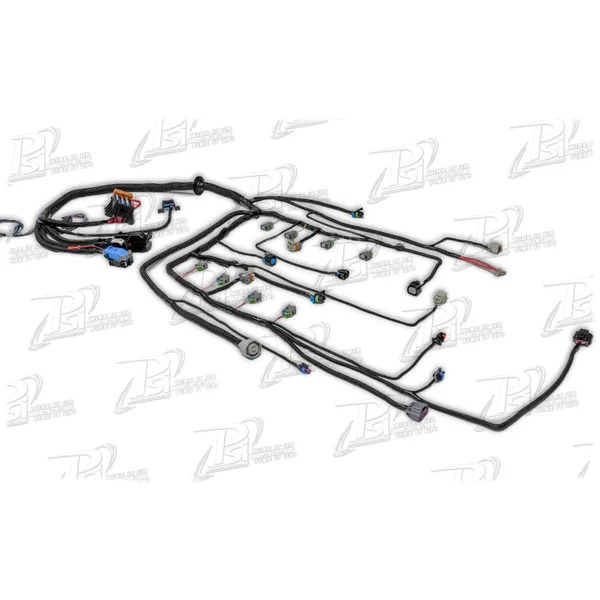
A crate LS3 is not quite turn key, and the gap between the sticker and the first start catches people off guard.
It needs a complete engine management solution. The crate engine ships with no computer and no harness. GM sells its own controller kit, and a PSI Gen 4 standalone harness paired with a programmed E38 ECM does the same job with a harness built for your specific transmission and chassis rather than a generic layout.
It no longer includes some parts it used to. Current crate LS3s ship without exhaust manifolds or a flexplate, items that were included in years past. Budget for them.
It has no accessory drive. Alternator, power steering, brackets, and belts add several hundred to a thousand dollars depending on the setup, and A/C adds more.
The oil pan probably will not fit your chassis. Crate engines ship with a late model pan that hangs wrong in most classic frames. GM's muscle car pan kit or an aftermarket swap pan is a near universal line item.
The drive by wire pedal. The LS3 is electronic throttle only, so plan on the correct accelerator pedal for your Gen 4 throttle body.
The warranty has fine print. The 24 month, 50,000 mile coverage is real and it is the single best argument for buying new, but read the terms. How and where the engine is installed affects the claim process, and self installed engines are treated differently than dealer installed ones. Know what you are getting before you count the warranty as priceless.
The Hidden Costs of the Used Pullout
The pullout comes with parts the crate engine lacks, which is its great advantage. It also comes with unknowns, which is its great weakness.
The factory harness and ECM are not plug and play. This is the most common surprise. A pullout harness is built for the donor car, woven into its body wiring, its fuse box, and its anti theft system. Making it run in a different chassis means significant rework, and the factory ECM will not run the engine at all until the VATS anti theft function is removed and the tune is corrected for your transmission and accessories. By the time you pay someone to rework a crash damaged harness and reflash the ECM, a purpose built standalone harness and programmed ECM is usually the same money or less, with new wire instead of 15 year old insulation.
The accessories rarely fit. Corvette and Camaro accessory drives sit in different locations, and one or both usually interfere with steering or frame rails in a classic chassis. Plan to re bracket or replace, same as the crate.
Condition is a guess. A compression tested engine from a reputable recycler with a warranty is a very different purchase than a bare engine on a marketplace pallet. Inspect everything you can. Our junkyard inspection checklist applies to the LS3 exactly as it does to truck engines, and so does the advice on pulling the VIN from the block or ECM to verify what you are buying.
Make sure it is actually an LS3. The automatic transmission 5th gen Camaro got the L99, which looks nearly identical but carries Active Fuel Management and variable valve timing that most swappers delete. The 8th VIN digit settles it, W for the LS3 and J for the L99. Plenty of honest sellers do not know the difference. Details are in our identification guide.
The Middle Path Most People Skip
Here is the option the crate vs used debate always misses. The L92, L9H, and L94 are 6.2L truck engines from Escalades, Denalis, and Yukons that share the LS3's block architecture and the same family of rectangle port heads.
They came in far greater numbers than the LS3, which makes them cheaper and easier to find with reasonable miles, and they respond to the same modifications. A truck 6.2 with an intake swap gets you most of the way to LS3 performance for thousands less, and the wiring recipe is the same Gen 4 story. If the badge matters less to you than the result, price these before you decide.
Our L92 tech page has the full rundown.
So Which Should You Buy?
Buy the crate if the build has a deadline, the budget can absorb the real all in number, or the engine is the heart of a car you plan to keep for decades. New internals, zero unknowns, and a warranty are worth real money, and every hour you do not spend chasing a mystery misfire is worth something too.
Buy the pullout if you can verify condition, the price is genuinely below the crate math after you add harness, ECM work, and accessories, or you plan to modify immediately. There is no reason to pay for a factory warranty you intend to void with a cam swap in month two, and a healthy used LS3 is a spectacular engine.
Buy the truck 6.2 if you want LS3 style performance and would rather spend the difference on the rest of the car.
Whichever engine wins, the wiring answer is identical. All of these are Gen 4, 58X, drive by wire engines, and they all run on the same recipe of a Gen 4 standalone harness matched to your transmission, a programmed E38 ECM with VATS removed, and the correct pedal. That is the same package whether the engine arrived in a crate or on a pallet, and it is the part of the project where new wiring pays for itself on the first key turn.
FAQ
How much is an LS3 crate engine right now?
As of mid 2026, roughly $7,300 to $8,100 for long block versions and $10,500 to $12,000 for complete crate engines, depending on horsepower level and retailer. Prices shift often, so check current listings.
What cars can I pull a used LS3 from?
The 2008 to 2013 Corvette, 2010 to 2015 Camaro SS (manual transmission cars), the Chevy SS sedan, and the Pontiac G8 GXP. Automatic 5th gen Camaros carry the L99 instead.
Does a crate LS3 come with a computer and harness?
No. Engine management is separate on every crate LS3. You need a controller kit or a standalone harness with a programmed ECM.
Is the L99 a bad swap engine?
Not at all, but it carries AFM and VVT that most builders delete or tune around, and it should be priced below a true LS3, not at parity.
Can I use the wiring harness that comes with a used pullout?
Usually not without significant rework, and never without ECM reprogramming to remove the factory anti theft system. Most builders find a new standalone harness costs about the same as properly reworking a used one.
Made your choice? Match it with a Gen 4 58X standalone harness or controller kit built and tested for your exact combination. Still comparing engines? The LS3, L92, and L99 tech pages have full specs, and ouridentification guide will keep a mislabeled engine from following you home.