My Cart

Drive-by-Wire vs. Drive-by-Cable LS Harness: Which Should You Use?

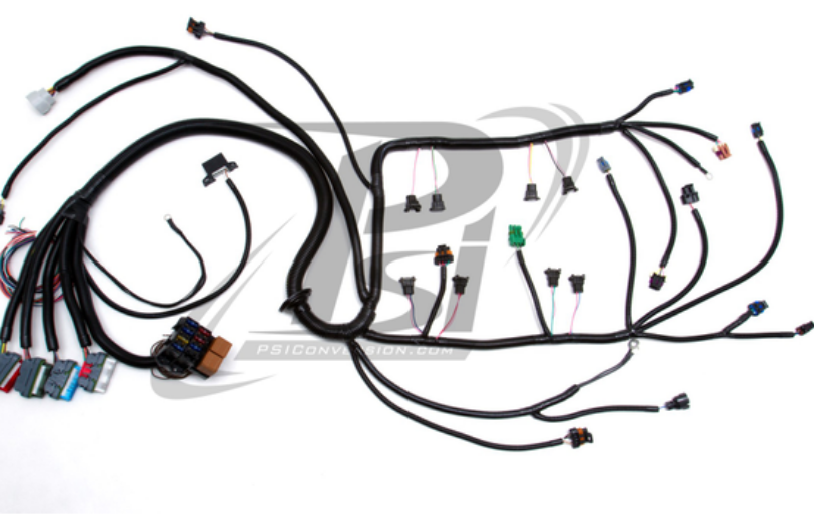
When building an LS engine swap, one of the first decisions is choosing between a drive-by-wire (DBW) and a drive-by-cable (DBC) setup. Each requires a different type of LS harness, and using the wrong one can lead to serious performance and compatibility issues.
Understanding the mechanical and electrical differences between the two systems helps prevent mistakes and ensures your project runs smoothly from the start.
At PSI Conversion, every LS swap harness is made in the USA, designed to GM specifications, and computer-tested for precision.
Their wiring harnesses support both drive-by-wire and drive-by-cable configurations for Gen II through Gen V LS and LT engines, each built with OEM-grade Delphi connectors and TXL high-temperature wire for reliability under heat and vibration
Understanding LS Drive-by-Wire and Drive-by-Cable Systems
Both drive-by-wire and drive-by-cable throttle systems control how air enters the engine, but they differ in how the throttle body receives input from the accelerator.
Drive-by-cable systems use a direct mechanical linkage, while drive-by-wire systems use electronic signals between sensors and the throttle body.
In LS engines, the type of throttle system you use directly affects the harness design. PSI Conversion offers standalone harnesses for both systems, matched to specific generations of LS engines, from Gen 2 LT1/LT4 to Gen 5 LT/ECOTEC3 engines.
What Is a Drive-by-Cable LS Harness?
A drive-by-cable LS harness is built for throttle bodies that use a traditional cable connection between the gas pedal and the throttle plate. The driver’s foot physically moves the throttle blade, and the cable system transmits that movement without electronic control.
This harness includes connectors for sensors such as the throttle position sensor (TPS) and idle air control (IAC) valve. It works best with older LS generations, such as Gen III (1997–2007) engines using 24X crank reluctor wheels. PSI Conversion’s DBC harnesses for these engines, like the HAR-G3CA or HAR-1013, come configured for setups including the 4L60E, 4L80E, and T56/TR6060 manual transmissions.
Drive-by-cable harnesses are popular among enthusiasts who want simplicity and mechanical control. Because there’s no electronic throttle motor, tuning can be more straightforward for basic engine swaps.
What Is a Drive-by-Wire LS Harness?
A drive-by-wire LS harness connects an electronic throttle body (ETB) to sensors and an electronic pedal assembly. Instead of a cable, this system uses an accelerator pedal position (APP) sensor that sends input to the engine control unit (ECU). The ECU then adjusts the throttle plate electronically for optimal performance.
PSI Conversion’s DBW harnesses are built for Gen III, IV, and V LS/LT engines and include the necessary wiring for the electronic throttle body, pedal sensor, and associated components.
Each harness is computer-tested to verify all electrical circuits for accuracy before shipping.
This system allows for smoother throttle control and better integration with modern features such as cruise control, traction systems, and advanced tuning software.
Key Differences Between Drive-by-Wire and Drive-by-Cable LS Harnesses
Choosing between DBW and DBC systems depends on your engine generation, intended use, and the components already installed in your swap. Each has its own advantages and technical considerations.
Throttle Control Mechanism
The main distinction lies in how the throttle responds to driver input. Drive-by-cable harnesses rely on mechanical motion, while drive-by-wire harnesses use electrical signals.
In PSI Conversion’s DBC setups, the throttle cable links directly to the throttle body. The harness primarily handles sensor connections. Meanwhile, DBW harnesses must integrate both the throttle body’s motorized actuator and the accelerator pedal sensor. This makes DBW harnesses more complex but also more precise.
ECU and Sensor Compatibility
Drive-by-wire systems require specific ECUs capable of managing electronic throttle control. These are typically found in Gen IV (58X) and Gen V LS engines. Drive-by-cable systems use earlier ECUs, such as those paired with Gen III (24X) engines.
Using the wrong harness can prevent communication between the ECU and sensors.
PSI Conversion designs its harnesses to match each engine’s factory pinouts, ensuring compatibility with both the ECU and sensors. This guarantees proper ignition timing, throttle response, and fuel management.
Installation Complexity
A DBC setup is simpler to install since it requires no wiring for a pedal position sensor or throttle actuator. DBW systems require careful routing and connection of the throttle body, pedal, and ECU wiring.
PSI Conversion’s DBW harnesses are built with labeled connectors to simplify installation. Each harness uses brand-new GM Delphi connectors and sonic-welded splices, ensuring clean electrical continuity even under high vibration and temperature.
Despite being more complex, DBW harnesses are preferred in modern builds because of their compatibility with newer engines and tuning capabilities.
Throttle response differs between the two systems. Drive-by-cable systems provide instant, mechanical feedback. Drive-by-wire systems rely on sensor input and ECU mapping, allowing for fine-tuned throttle curves.
While DBC setups provide a more analog feel, DBW harnesses can deliver smoother transitions and improved drivability when calibrated correctly. PSI Conversion offers PCM programming and HPTuners support to ensure precise throttle behavior for DBW systems
Choosing the Right LS Harness for Your Engine Swap
Selecting between drive-by-wire and drive-by-cable configurations depends on your engine’s generation, ECU setup, and intended vehicle application. PSI Conversion offers both styles for nearly every LS engine generation, from the early 1990s LT1/LT4 to modern direct-injection LT engines.
For Gen III LS Engines (1997–2007)
Most Gen III engines, including LS1, LS6, and early Vortec models, use 24X reluctor wheels and are commonly set up for drive-by-cable throttle bodies. These engines pair well with DBC harnesses like the HAR-G3CM or HAR-G3CA from PSI Conversion, which are compatible with both manual and automatic transmissions.
For builds that retain factory-style throttle control, the drive-by-cable setup is simple, dependable, and effective.
For Gen IV LS Engines (2007–2014+)
Gen IV engines, such as LS2, LS3, LS7, and LSA, typically use 58X reluctor wheels and are often configured for drive-by-wire systems. PSI Conversion’s harnesses like the HAR-G4WA or HAR-G4WM are designed for these engines and include connectors for the electronic throttle body and pedal sensors.
These harnesses ensure accurate communication between the ECU, sensors, and throttle components, enabling smoother performance and better engine management.
For Gen V LT Engines (2014–Present)
The newest generation, including LT1, LT4, L83, and L86, uses direct injection and exclusively operates with drive-by-wire throttle systems. PSI Conversion’s harnesses for these engines, such as HAR-LT1 and HAR-LT4, are designed for both manual and automatic transmission configurations.
These harnesses provide full compatibility with direct-injection setups and modern ECU controls, ensuring proper throttle calibration and reliable sensor performance.
Matching Harness Type to Transmission
Transmission type also affects harness selection. Automatic and manual transmissions require different connector configurations for sensors and control modules.
PSI Conversion’s catalog includes DBW and DBC harnesses tailored for both T56/TR6060 manual and 4L60E/4L80E automatic setups.
Installing a harness meant for the wrong transmission type can lead to missing signals or improper operation. Always confirm your transmission model before ordering.
Common Installation Mistakes with LS Harnesses
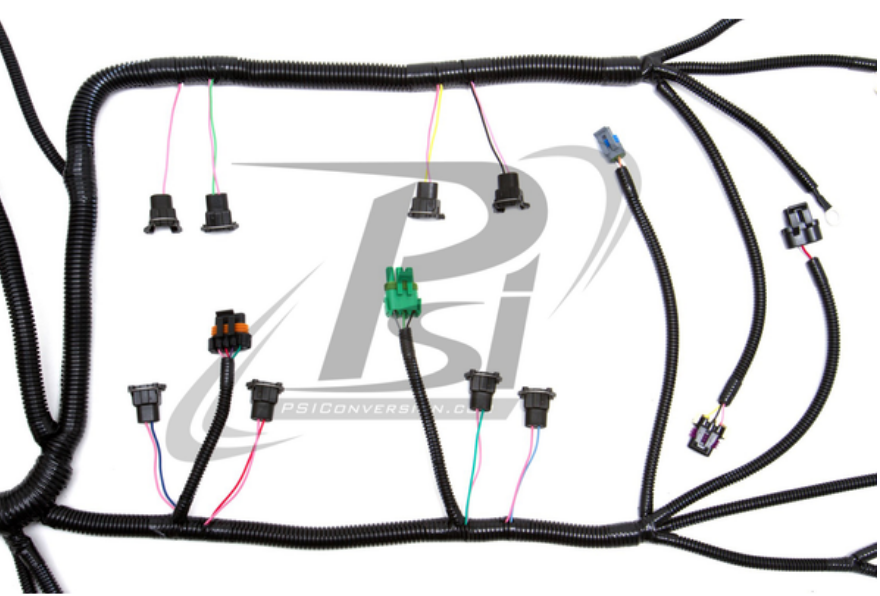
Even when the correct harness is selected, certain installation errors can cause significant problems. Understanding these mistakes can help prevent electrical issues and ensure a clean, reliable build.
Ignoring Grounding Points
Failing to properly ground the harness is one of the most common errors in LS swaps. A poor ground can cause sensor noise, ECU communication loss, or misfires.
PSI Conversion harnesses include dedicated grounding points that must be connected to clean metal surfaces free of paint or corrosion.
Mixing Drive-by-Wire and Drive-by-Cable Components
Some builders attempt to mix components from both systems, such as using a DBC throttle body on a DBW ECU. This leads to sensor mismatch and poor drivability.
PSI Conversion’s harnesses are built for complete system compatibility, and using matched components ensures reliable performance.
Skipping ECU Programming
The ECU must be properly programmed to work with the selected throttle system. PSI Conversion offers ECU and PCM programming options to make sure each harness communicates correctly with the throttle, sensors, and transmission.
Without proper programming, throttle operation may be erratic, and certain functions may not respond at all.
Final Thoughts
Choosing between a drive-by-wire and drive-by-cable LS harness depends on your engine’s generation, throttle setup, and driving goals. Drive-by-cable harnesses are mechanically simple and well-suited for older Gen III engines, while drive-by-wire harnesses offer improved precision and integration with newer ECUs found in Gen IV and Gen V engines.
PSI Conversion manufactures both DBW and DBC harnesses in the United States, using GM-spec components like Delphi connectors and TXL high-temperature wiring. Each harness is computer-tested to ensure proper performance and durability.
Matching your harness type to your engine, ECU, and transmission ensures a successful LS swap that performs reliably on the road or track.
FAQs
Can I convert a drive-by-cable engine to drive-by-wire using a PSI Conversion harness?
Yes, but it requires compatible throttle components, an electronic pedal assembly, and a matching ECU. PSI Conversion offers harnesses that support both setups as long as all parts correspond to the same LS generation.
Are drive-by-wire LS harnesses harder to install than drive-by-cable?
Drive-by-wire harnesses require more connections due to the electronic throttle and pedal sensors, but PSI Conversion simplifies installation with clearly labeled connectors and plug-and-play designs.
Can I use a Gen IV drive-by-wire harness on a Gen III engine?
No. Each LS generation has specific sensor types and reluctor wheel configurations. Using a Gen IV harness on a Gen III engine will result in ECU miscommunication and poor operation.
What materials does PSI Conversion use in its LS harnesses?
All PSI Conversion harnesses use new GM Delphi connectors, TXL high-temperature wire, and sonic-welded splices. These materials meet or exceed OEM durability standards and resist heat, oil, and vibration.
How do I identify whether my LS engine is drive-by-wire or drive-by-cable?
Drive-by-cable engines have a mechanical linkage from the pedal to the throttle body, while drive-by-wire engines use an electronic pedal sensor and motorized throttle body. PSI Conversion provides a VIN Decoder and Component ID Guide to help identify your specific engine setup.